Showing posts with label Broken Window. Show all posts

Saturday, March 9, 2013

Why the State and Keynesians Love War

A look into the minds of those who love war

Governments love going to war, which may seem a bit strange because according to the "What the State Fears" section of Anatomy of the State, governments fear above all else the end of their power which can either come from another state conquering them through war, or by revolution from the people. However, while wars do pose some risk to governments, war also gives governments a great chance to expand the scope of their power, both over new territory that they conquer, and even among their own people as they flood them with propaganda that this war isn't really about one government fighting another, but one people, fighting another people, totally separate from your own. In the words of Randolph Bourne, "war is the health of the state".

The evil, evil Nazis who want nothing more than to eat the heads of babies.

In the Medieval days, this fallacy was almost entirely destroyed, and war was simply looked upon as pointless endless squabbles between various nobles that the peasants simply ignored. However, with the rise of democracy, identification of the state with society as a whole has been redoubled, and people once again believe that wars are waged against them and not the government. In the US, this fallacy is heard all the time as people talk of the "brave men and women fighting in Iraq for our freedom" or some similar bullshit.


So beyond simply encouraging nationalistic/patriotic thinking and giving governments a chance to expand their power base, war is also a great chance for politicians to gain prestige as "great leaders". FDR, Winston Churchill, and especially Stalin all did horrible, horrible things with their position in power, yet many people (except for Stalin thanks to the Cold War) are looked up to as great leaders among men, not because the people are able to make good comparisons between these men and peace-time leaders, but because of propaganda and readily apparent action.


Furthermore, along with the power, the prestige, and the propaganda, war also allows governments to gain massive control over the people's everyday lives as "emergency wartime measures". Governments nationalize industry and force businesses to switch production over to certain kinds of goods that are necessary for this war. After all, any red-blooded American should be happy to help their governments defend them from the evil Nazis, and anyone who resists might as well be a traitor to his people. If they don't take over an industry, the government may still impose price controls as a way of making sure they get the price for what they want. They may say that this is because we need "rationing" in a time of war, so prices must be controlled by them. Never mind that prices going up and down already rations goods in the economy.


War is also a perfect excuse for governments to take over the money supply, eliminating a gold standard, so that it may print as much money as it needs to spend. In times of war, the government needs lots of money and it needs it now, so it can shame unpatriotic "gold hoarders", and fund its war.As you can see from this chart, governments really do love to print money, especially for war.


If people complain about these situations and the government is not able to guilt the public into shutting up, then they are able to simply shift the blame over to the enemy, who has forced them to impose these terrible measures as they are necessary for victory. Of course once these measures are in place, they very rarely ever go away, even after the war is over. Governments don't voluntarily give up power once they have taken it. Take a look at the illustrated version of F. A. Hayek's Road to Serfdom. War gives governments a chance to exercise their real power.


These kinds of actions are unthinkable in an anarcho-capitalistic society. Defense groups would be unable to hide the cost of their actions by inflating the money supply, and warmongerers are required to charge higher prices for their destructive acts (paying for people to go and die, paying hazard pay, paying for the things they destroyed, etc.), moving them over to their cheaper, more peaceful, and more efficient competitors.


Liberty is to peace as government is to war.

Now Keynesians especially love war, as war means that governments are going to dramatically boost their spending, which to them is synonymous with a healthy economy, and exert the kind of control over the economy that they lust after. According to the Keynesian version of history, America was stuck in the Great Depression for years due to overproduction of capitalism, causing the general glut. President Hoover tried the laissez-faire approach, but the economy just got worse, but then good ol' Franklin Delano Roosevelt took to the stage and started his New Deal programs,which helped, but it wasn't quite enough to save the economy. But then, thankfully, the US entered into World War 2 which raised spending enough to get out of the Great Depression.

Wars create this wonderful economy because the government spends its money on tanks and ships and planes and bombs and ammo so that it can all send it out into the middle of the nowhere (if you're lucky.) and blow it up. Apparently, doing that is good for the economy.


Just to prove that this is not an ad hominem attack by me, I will provide a good example of this type of thinking. The most prominent Keynesian economist (or at least English speaking journalist) is Paul Krugman from the New York Times. Krugman is basically just a synonym for Keynesianism and inflation now. Krugman actually won the Nobel Prize in Economic Science back in 2008, so this is not some crazy guy on the fringe of economic thinking. And, in all seriousness, the Nobel Prize winning Paul Krugman advocated for the government to fake an alien invasion so that the government could increase spending and get us past the recession.

Ozymandias would be proud.


But war gets even better for Keynesians. Not only does the government increase its spending, but the public often needs to as well (except of course for those under rationing). Keynesians joyously count all the houses bombed during war as the "blessings of destruction", which has "backed up demand", encouraging people to spend money on building new houses. And those people need to replace all the furniture, refrigerators, and washing machines that got blown up as well, so that's more "prosperity creating spending".

And the Keynesians may even further count the blessings of war as it "creates jobs", decreasing unemployment! Thanks to war, people may be rounded up and shipped off to the battlefield so that they may fight to the death. Do the wonders of war know no bounds?


So by Keynesian reasoning, through diverting production to things which serve no socially useful purpose, and even worse, blowing them up causing the destruction of the useful things they were made of and destroying other useful things that blow up with it, and sending all your most able-bodied people to go out and die instead of working to produce things that help themselves and other people live better lives, helps the economy.

And this is why the broken window fallacy is so very, very important.

Monday, January 21, 2013

What is demand?

It occurs to me that many misunderstandings of economics today come from a confusion with "demand" and "need". A common broken window fallacy is to say things like "World War 2 boosted demand for tanks and similar resources to fight off the Nazi's, and since a depression is essentially a lack of demand, World War 2 (and big government spending in general) ended the Great Depression. Furthermore, the bombing raids that destroy people's homes increases demand as well, as those people will now need to buy new homes.", or similar reasoning.

"What actually brought the Great Depression to an end was the enormous public spending program otherwise known as World War II."

These statements only appear to have some genuine reasoning behind them because the english language has two different uses for the word "demand".

In one sense, demand can mean a need or desire. It is certainly true that war can create very pressing needs in society, both for protection from destruction and repairs for the damages it causes, just as it is true that breaking a shopkeeper's window creates a need from him for a new window.

Look at this thriving economy!

But the other meaning that I think economists are more familiar with when talking about markets is desire enabled by purchasing power. It doesn't matter how much I want something if I don't have the ability to purchase it from someone else. An increase in purchasing power, not need, is what increases demand.

So with this distinction, we can immediately see a problem with the idea that that destruction increases demand as it focuses on generating need as compared to empowering already present needs. But to avoid further logical blunders and to understand the full extent of the damages of destruction, one must understand what purchasing power is.

So where does purchasing power come from? If you ask your average Joe how you can increase your purchasing power the first response you'll likely here is "get more money". This appears to be true at first. If I want to make more purchases, I need to have more money. If you look at supply and demand charts, the axis beside whatever you are trying to purchase is measured in dollars as well. 


But it goes a little bit further than this. If money itself was what enabled demand, then simply printing more money could increase demand. This is exactly the mistake people make when they support "stimulus packages" that will save the economy by giving everyone more money, thus letting them buy more things and fixing the economy forever. But that's only looking at half of the story. Money is just a commonly used medium of exchange. Take out the extra step, consider trade in the term of bartering, and you can see its true nature.

To be able to demand anything you need to produce something someone *else* demands. To be able to offer something in trade, you need to have produced that thing that you offer in trade, just as they needed to produce the thing they are offering to you.

On markets, products are exchanged against products.

With this, we can see that words like "supply" and "demand" are really entirely relative terms. They're two sides of the same coin. The graph above would be just as accurate, nay, more accurate to say "quantity A" and "quantity B" instead of "quantity" and "price". The x-axis could be the quantity of wheat demanded while the y-axis could be the quantity of corn, alcohol, televisions, gold, or dollars. My supply is your demand and your demand is my supply.

Jean-Baptiste Say, along with his market

So in answer to the original question, purchasing power comes from production, from the supply of goods that can be offered in trade. This is the essential lesson of Say's Law of Markets.  If one wants to increase demand, simply printing more money will do you no good as it adds no more things to indirectly trade for. People will receive a sudden increase in dollars and mistakenly believe themselves to be rich only to find that they have nothing to buy. Its a medium of exchange with nothing to mediate between. Furthermore, this reveals new light on the destruction of war. Not only does destroying things fail to increase demand, but it actually reduces demand as people now have less products to trade against to other people!

In short, production of what people want is what creates demand, while the destruction of things people want destroys demand.

Monday, October 1, 2012

Economics: Lesson 2 - Value

Throughout it's history as a science, economists have puzzled over prices as a very central issue. What made one good more valuable than another? Why are prices one thing and not another? What do similar prices reveal about certain goods? To solve just why prices are the way they are, economists came up with different theories of value to explain it.

OR IS IT??!?!?

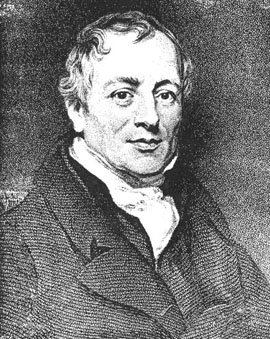
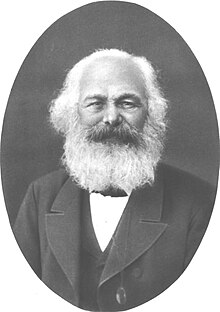
Among the classical economists, the mainstream theory was the labor theory of value. This idea was pushed by Adam Smith, David Ricardo, and Karl Marx.

Adam Smith                               David Ricardo                               Karl Marx

According to this theory, the value of a good is derived by the amount of labor required in obtaining it. Because of this, the value of that good is inherit. There is an objectively "correct" price.
The value of a commodity, or the quantity of any other commodity for which it will exchange, depends on the relative quantity of labour which is necessary for its production, and not as the greater or less compensation which is paid for that labour.
- David Ricardo, On the Principles of Political Economy and Taxation, Chapter 1
Karl Marx play an interesting role here, actually. By his thinking, if all value comes from labor, then any "capitalist" who makes a profit must do so by denying the laborer the full value of their output. Hence, all profit is exploitation. The labor theory of value is key to most, if not all, of his school of thought.

Of course, his theory of value is a bit unique as he's declaring for abolishing private property.


This theory was so widely accepted because of something known as the Diamond-Water Paradox. Why is it that water, something absolutely vital for human life, has such a low price while diamonds, which certainly don't serve as a basic human necessity, demand such a high price? The answer Adam Smith had come up with is that water is just a lot easier to get. It does not require anywhere near as much labor, so it has a lower price. Diamonds, however, require a lot of work both collecting and refining it, so it has a higher price.

The real price of every thing, what every thing really costs to the man who wants to acquire it, is the toil and trouble of acquiring it.
- Adam Smith, The Wealth of Nations, Chapter 5 


The labor theory of value wasn't universally accepted though, even in the days of Adam Smith.  Frédéric Bastiat, the inventor of the Broken Window Fallacy, took particular problems with it. After all, wouldn't this mean that sources of difficulty actually make work more valuable? Bastiat pointed out the absurdity of this notion in his book Economic Harmonies.

It is too bad that Robinson Crusoe has invented nets to catch fish or game; for it lessens by that much the efforts he exerts for a given result; he is less rich.
...
It would be too completely evident that wealth does not consist in the amount of effort required for each satisfaction obtained, but that the exact opposite is true. We should understand that value does not consist in the want or the obstacle or the effort, but in the satisfaction; and we should readily admit that although Robinson Crusoe is both producer and consumer, in order to gauge his progress, we must look, not at his labor, but at its results.
-  Frédéric Bastiat, Economic Harmonies, Chapter 4, emphasis added


The idea of value being presented here is the subjective theory of value. It states that value is not inherit to a good, but is derived from the value that man gives to the world around him. His value is derived from the relative ends a man is trying to fulfill.

However, Bastiat was unable to come up with a coherent explanation for the diamond-water paradox. After all, if this is true, why do we pay so little for drinking water? Are we honestly supposed to believe that people value having a diamond less than drinking?

Because of this, the subjective theory of value was not really accepted into mainstream economic thinking until the end of the 19th century, when it was discovered independently and nearly simultaneously by William Stanley Jevons, Léon Walras, and Carl Menger, the last of which founded the Austrian School of Economics. These men developed the concept of marginal utility.

Carl Menger and his magnificent beard.

Essentially, this insight showed that people are never in the position to judge a good by its class. You are never in a position to ask whether you would rather own all the diamonds in the world or all the water in the world. If you were, I doubt the diamond-water paradox would arise! Instead, people are trading discrete quantities of goods.

Imagine that I offer you a cup of diamonds for a cup of water. If you are like most people, you would accept this trade. But when you make this trade, you are not giving up drinking. Instead, you are giving up whatever end you would have fulfilled if you had another cup of water, which might be something frivolous like watering one of your plants again. This concept of what you could have done with this extra unit is known as an opportunity cost. This cost is the true cost of every exchange you ever make.


This theory also works well because it explains how trade works. If the value of things are intrinsic, then what would be the point of trading something of equal value? I'll trade you this dollar bill for your dollar bill. According to the Austrian School, a person's action shows their scale of values, or an imaginary scale by which they value one thing over another. If I buy milk at the store for $1.00, then that shows that having milk is higher on my scale of values than having $1. I "win" the trade. At the same time, the person selling the milk shows that having $1 is higher on his scale of value than having milk. He "wins" the trade. Each person comes off more satisfied and richer than before. If value was inherit, each person coming out of a trade with a more valuable thing makes about as much sense as each person coming off with the heavier object.

There should also be a note that this idea of subjective values is in no way trying to make a moral or philosophical statement. There might be some divine being out there that sets an official scale of values, such as a moral doctrine, that can accurately be called an objective standard of value. There might be some "perfect form", like Plato suggested, of beauty. One might argue that there is an intrinsic value to human life.


Economics and praxeology does not deal with such matters though, but only with how people act. If person A murders person B, we can accurately say that to his standard of values, person A preferred person B to being dead rather than him being alive. From the scientific standpoint, we cannot say whether this action is moral or not. To him, this human's life was obviously not considered intrinsically valuable.

This concept blew apart any previous idea of value, and was so influential that it's discovery is known as the Marginal Revolution. It forever changed the approach of economics as if it were a natural science, existing on its own, to something entirely dependent on people's own values, that can never be fully understood. To properly understand economics, we must understand the motivations of an acting man, not of something intrinsic to the world.


LOL, kidding, that would be retarded. Economics is a science, and those head government scientists properly know how to run the country and can control and manipulate it so it does exactly the right thing. Only those crazy Austrian Economists still think crazy things like that. Trust your leaders. They have very complicated charts and graphs, after all.

Wednesday, September 26, 2012

The Guardian pushes a £2-a-month levy on broadband to save their our newspapers

"A small levy on UK broadband providers – no more than £2 a month on each subscriber's bill – could be distributed to news providers in proportion to their UK online readership. This would solve the financial problems of quality newspapers, whose readers are not disappearing, but simply migrating online." - 
David Leigh, The Guardian

Uh huh. And a  £2 levy could save the candlemakers from lightbulbs.

Businesses that are using outdated practices need to die in capitalism. You can't expect people to prop up your failed business because improving your business practices is hard. But even worse, you want to force this upon people.

http://www.guardian.co.uk/media/2012/sep/23/broadband-levy-save-newspapers

Friday, August 24, 2012

The Broken Window Fallacy

"Life, which you so nobly serve, comes from destruction, disorder and chaos. Now take this empty glass. Here it is: peaceful, serene, boring. But if it is destroyed...
[breaks glass and robots come to sweep it up]
Look at all these little things! So busy now! Notice how each one is useful. A lovely ballet ensues, so full of form and color. Now, think about all those people that created them. Technicians, engineers, hundreds of people, who will be able to feed their children tonight, so those children can grow up big and strong and have little teeny children of their own, and so on and so forth. Thus, adding to the great chain of life. You see, father, by creating a little destruction, I am in fact encouraging life. In reality, you and I are in the same business." - Jean-Baptiste Emanuel Zorg, The Fifth Element


I mentioned the broken window fallacy in my last post on Paul Ryan, and thought it would be good to go over it a bit more here.

The fallacy of the broken window is possibly the most famous parable in all of economics. It was originally created by Frédéric Bastiat, a french economist, in 1850. It's essential purpose is to show that destruction does not help the economy, but in fact, hurts it. While this seems painfully obvious to most people, this fallacy comes up a lot, especially with politicians.


The parable basically goes like this.

A shopkeeper's careless son breaks a window. The shopkeeper was upset by this, naturally, but whenever he talked to anyone about it they just said "That sucks, but what would happen to the glazier if no one ever broke windows?"

The shopkeeper must now pay six francs to the glazier to fix his broken window. This act of destruction has therefore encouraged trade. That's obvious, or as as Bastiat said, "that which is seen".

It is wrong, however, to say that breaking windows is a good thing, that it benefits society, and that it encourages economic growth, then you are ignoring "that which is not seen."

If the window had not been broken, the shopkeeper could have spent his money on something else such as shoes, and he would still have his window. All these things are not seen, and that's what has been lost.

This accident has kept the shopkeeper for improving his life, but instead must work to get back where he already was.


The moral of the story is, of course, that destruction destroys things. It very clearly shows the idea of an opportunity cost, that is, the cost of what the shopkeeper could have done with his time and resources. If breaking windows really helped the economy grow, how much more would economic good could we do if we destroyed the entire house instead? Or even the rest of the town?


This fallacy has sneaked into modern economic theories in many ways.

By inflating the money supply, the Federal Reserve "encourages investment" by making the dollar worth less and less, making people want to buy things.

Keynesian's so called "wartime prosperity" employs men and scarce resources so that they may be blown up while also blowing up the other countries men and scarce resources.

During the Great Depression, farmers were payed to not grow crops and kill excess livestock so that the price of food would go up under the Agricultural Adjustment Act while people were starving. Destroying crops not put food in people's bellies.

Obama's "Cash for Clunkers" program bought up old cars with taxpayer money, then had those cars destroyed to encourage people to buy new cars.

Why, just a year ago Paul Krugman spoke of how faking an alien invasion would theoretically save the economy! These people are nuts!


"If we discovered that space aliens were planning to attack and we needed a massive build-up to counter the space alien threat, and inflation and budget deficits took secondary place to that, this slump would be over in 18 months. And then if we discovered, "whoops, we made a mistake," we'd [still] be better..." - Paul Krugman

Economic growth is no different than GDP to these people. Just a number on the screen. Spending, even wasteful spending, is what's important to them, and because of this flaw they miss the entire point of spending: Production. The purpose of the economy is the satisfaction of man's material desires by the production of goods and services.

Wednesday, August 22, 2012

Paul Ryan claims Obama defense cuts costs America jobs

"President Obama's reckless defense cuts that are hanging over our cloud, hanging over the horizon, could put almost 44,000 jobs at stake right here in Pennsylvania. We are not going to let that happen..." - Paul Ryan

http://politicalticker.blogs.cnn.com/2012/08/22/ryan-blames-obama-for-scheduled-defense-cuts/


First off,  Obama has not cut our "defense" spending. He's expanded US presence in Afghanistan, he's followed Bush's timeline for Iraq, and let's not forget the whole thing with Libya and Uganda. Let's not forget that we're preparing to go to war with Iran. Like everything else, Obama has just followed Bush's policies, but increased the spending on it.


Secondly,  military positions are not jobs, especially when their function is not even providing defense. War does not produce anything, war blows stuff up. War sends good, working age men to go die, and has the opportunity cost of them doing an actually productive job. War hurts the economy. I cannot stress that enough.

Thirdly, isn't Paul Ryan's big thing supposed to be that he's slashed the budget or whatever? Yeah, this guy seems like he's really anti-spending.

Paul Ryan is just another standard Keynesian, working with a standard Keynesian broken window fallacy.